Tortilla chips are one of the world’s most popular snacks, with stable market demand and great business potential. For food manufacturers, snack processors and entrepreneurs entering the tortilla chip market, mastering standardized industrial production processes and selecting automated equipment is the key to efficient production.
Troubled by low manual production efficiency, uneven chip texture, poor flavor coating or high production costs? You’re not alone. These are common pain points for businesses scaling up production. In this guide, we’ll detail the traditional nixtamalization tortilla chips production line by REFA Machinery, break down core equipment functions, and show how automated production solves these challenges and drives business growth.
Switching from manual or semi-automatic processing to a full industrial production line is the best way to boost efficiency, ensure product consistency and meet market demand. As a professional food processing machinery manufacturer, REFA Machinery has optimized a complete traditional tortilla chips production line, covering every step from raw corn to finished packaged products.
Why Choose Traditional Nixtamalization for Tortilla Chips?
Most commercial tortilla chips use the traditional nixtamalization process with whole corn as raw material, instead of corn flour. This process retains corn’s natural sweet flavor, rich nutrition and authentic crispy texture. Compared with extrusion processing, traditional nixtamalization tortilla chips deliver better taste, higher market recognition, and are ideal for mid-to-high-end snack production.
Automated industrial lines perfectly replicate this traditional process, achieving continuous, stable and food-safe production, while solving issues like low manual efficiency, unstable product quality and high labor costs.
Full Industrial Tortilla Chips Production Process (REFA Machinery)
The streamlined production line ensures seamless material transfer and efficient continuous operation. Here is the step-by-step workflow:
1. Raw Corn Materials Handling
Store whole yellow/white corn in food-grade stainless steel silos for automatic quantitative feeding. This avoids raw material contamination and ensures a stable material supply for subsequent processing.
2. Cooking & Soaking Tanks (Core Nixtamalization Step)
Put whole corn into stainless steel tanks, mix with food-grade lime and pure water, cook at 90-100℃ for 20 minutes, then soak at room temperature for 8-16 hours. This step softens corn, removes hulls, and improves the final chip’s flavor and texture.
3. Dewater & Washing Machine
Drain excess lime solution, rinse corn thoroughly to remove residual lime, hulls and impurities, then vibrate to remove surface moisture, ensuring clean raw materials for grinding.
4. Screw Conveyor
Automatically transport washed and dewatered corn to the grinder via a food-grade closed screw conveyor, realizing hygienic, labor-free material transfer.
5. Grinder
Grind softened corn into smooth, uniform masa (corn dough). The grinder ensures consistent dough fineness and moisture content, critical for stable chip forming.
6. Masa Feeder
Accurately feed masa to the sheeter at a steady speed, guaranteeing even dough feeding and consistent sheet thickness.
7. Sheeter
Roll masa into 1.5-3mm adjustable thin sheets, and cut into classic triangular or custom chip blanks with an integrated rotary cutter.
8. Oven
Pre-bake cut chip blanks in a continuous tunnel oven at 350℃ for 30-60 seconds. This pre-cooks the dough, removes surface moisture, fixes chip shape, and reduces oil absorption during frying.
9. First Cooling
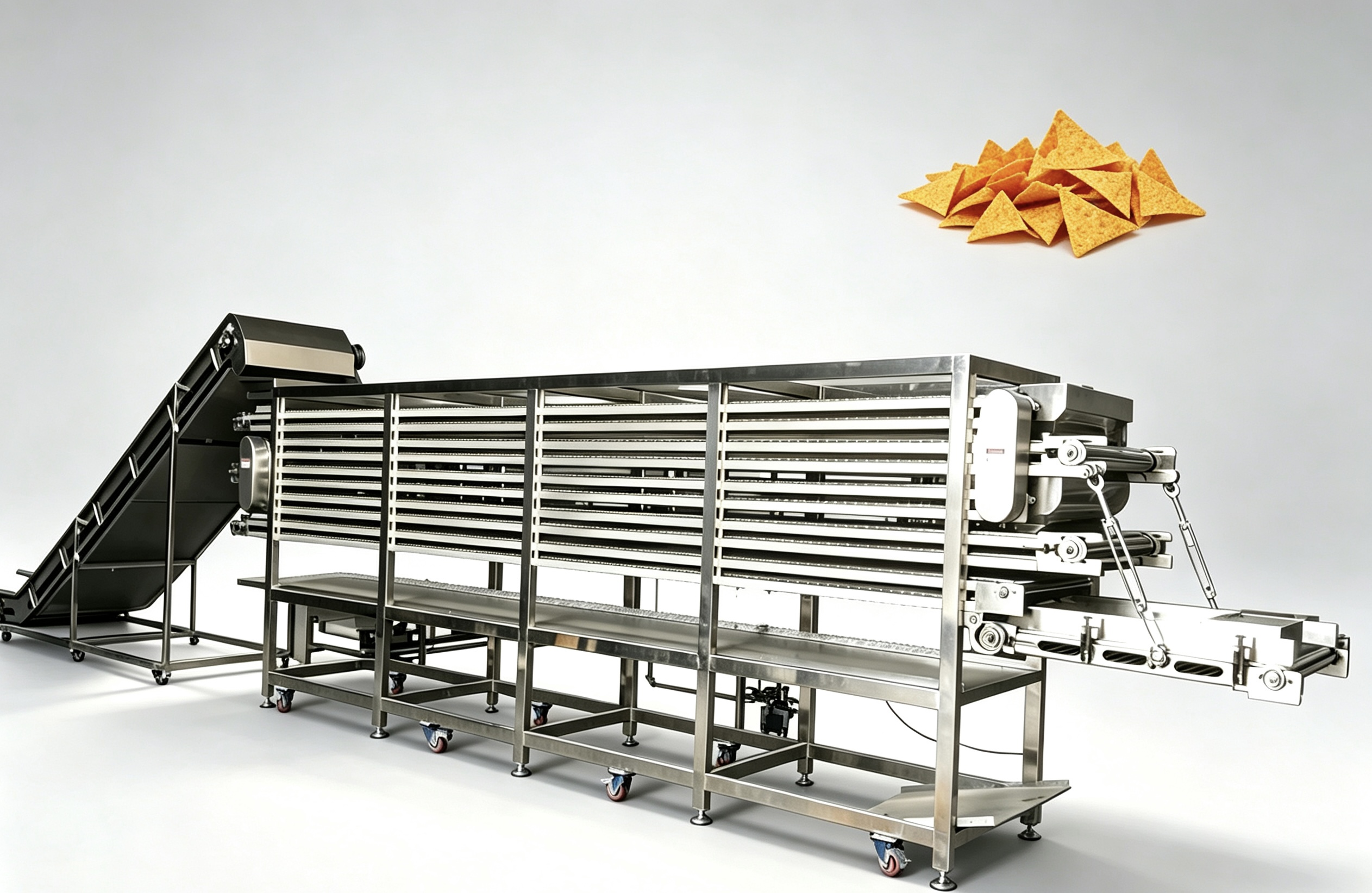
Cool pre-baked chip blanks to 50-60℃ on a conveyor to stabilize structure, prevent breakage and ensure even frying.
10. Frying
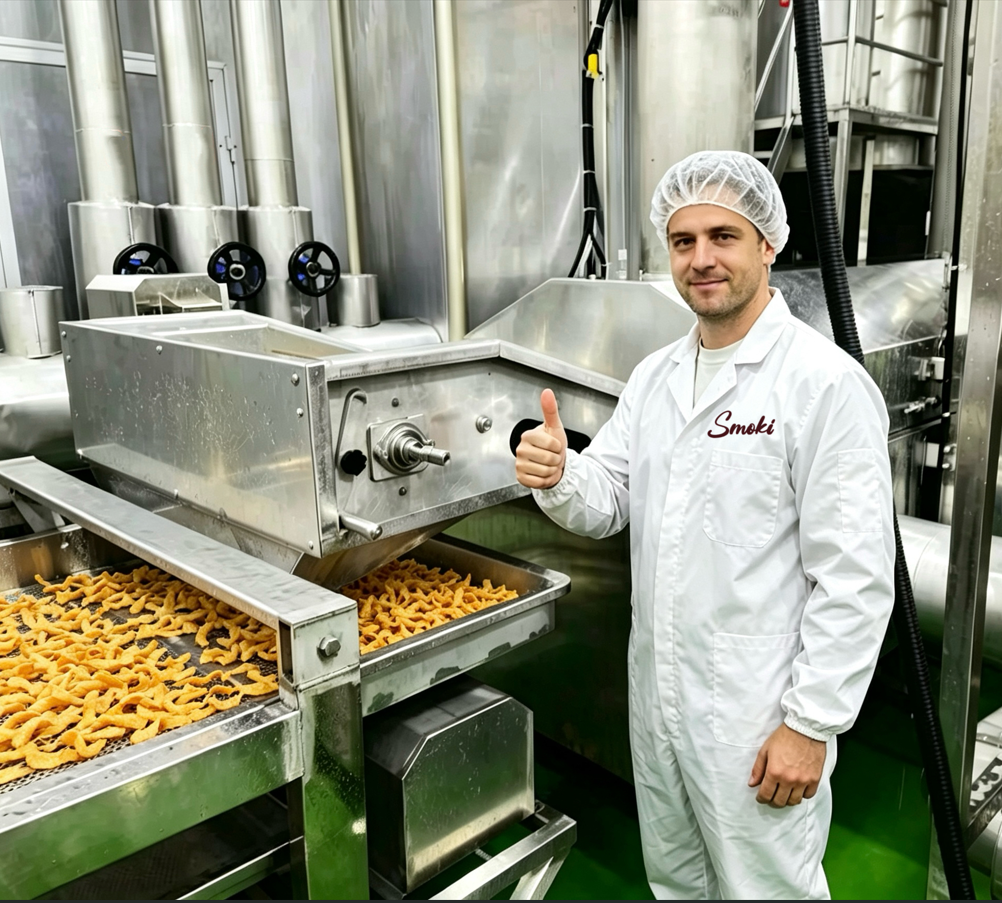
Fry cooled blanks in a continuous fryer at 175-190℃ for 120 seconds until golden and crispy. A built-in centrifugal de-oiler removes excess oil instantly, lowering oil content and extending shelf life.
11. Flavoring
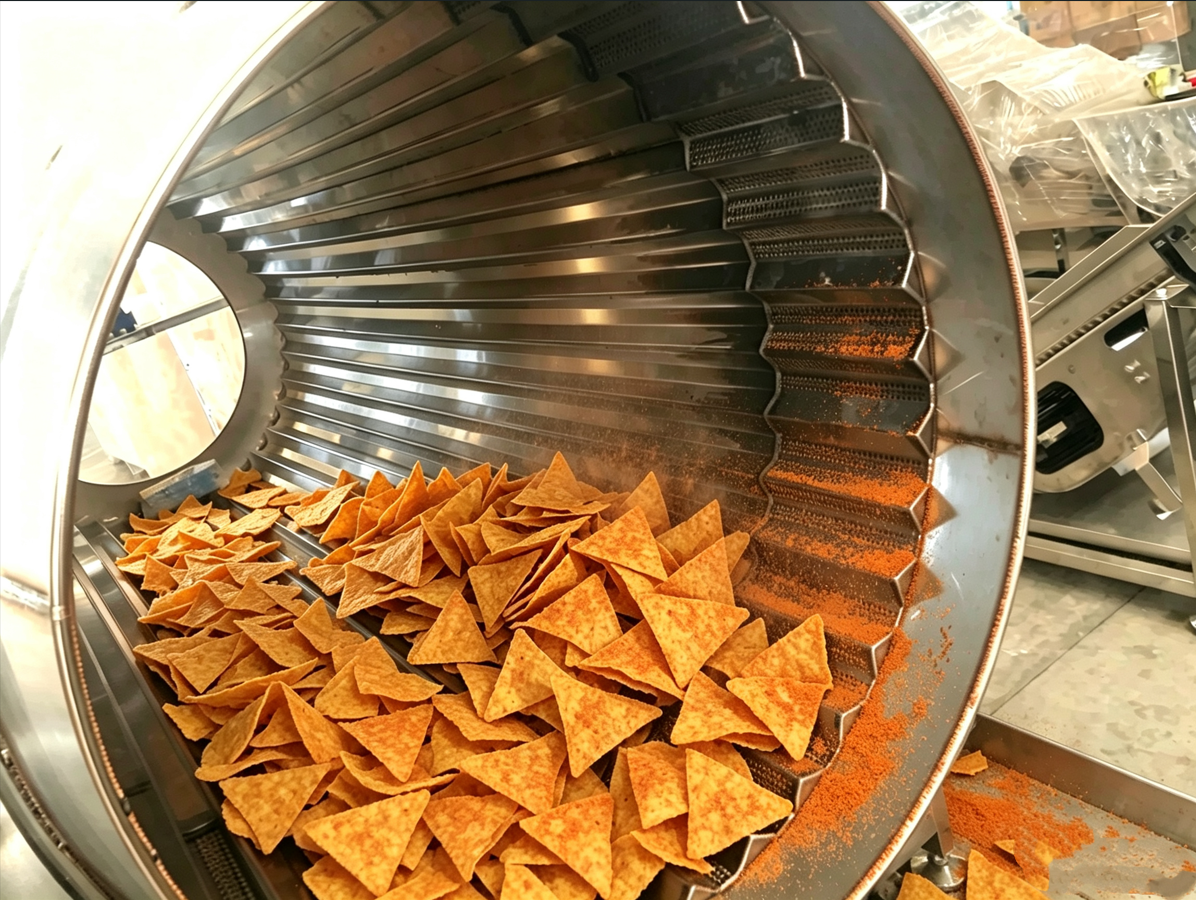
Feed hot fried chips into a rotating seasoning drum for even coating of dry seasonings (salt, chili, cheese, BBQ) or liquid flavors, ensuring consistent taste.
12. Second Cooling
Cool seasoned chips to room temperature (≈25℃) to avoid oil crystallization and package sogginess, keeping chips crispy for long.
13. Packing
Automatically weigh, fill, seal and package cooled chips. Nitrogen flushing is available to extend shelf life and lock in freshness, delivering market-ready finished products.
Key Advantages of REFA Tortilla Chips Production Line
1. Full Automation: Continuous production from raw corn to finished packages, reducing labor input and costs while greatly improving efficiency.
2. Food Safety Certified: All food-contact parts are 304 stainless steel, compliant with FDA, CE and international food safety standards, easy to clean and maintain.
3. Stable Product Quality: Precise equipment parameter control ensures consistent chip shape, thickness, crispness and flavor.
4. Customizable Solutions: Adjustable chip thickness, shape, capacity and flavor to meet diverse production and market needs.
5. Energy & Cost Saving: Optimized equipment design reduces energy consumption and oil loss, lowering overall production costs.
Final Thoughts
Investing in a professional industrial tortilla chips production line helps food enterprises expand scale, improve product quality and enhance market competitiveness. REFA Machinery provides turnkey solutions including equipment design, manufacturing, installation, commissioning and after-sales service, helping you build a reliable and efficient tortilla chips production system.
Contact us today for technical parameters, capacity configuration and customized quotes of our tortilla chips production line!
#TortillaChipsProductionLine #FoodProcessingMachinery #IndustrialSnackEquipment #NixtamalizationProcess #REFAMachinery